Filigree? Pierced? Laser Cut? Etched? Here's How to Tell the Difference
October 9, 2026
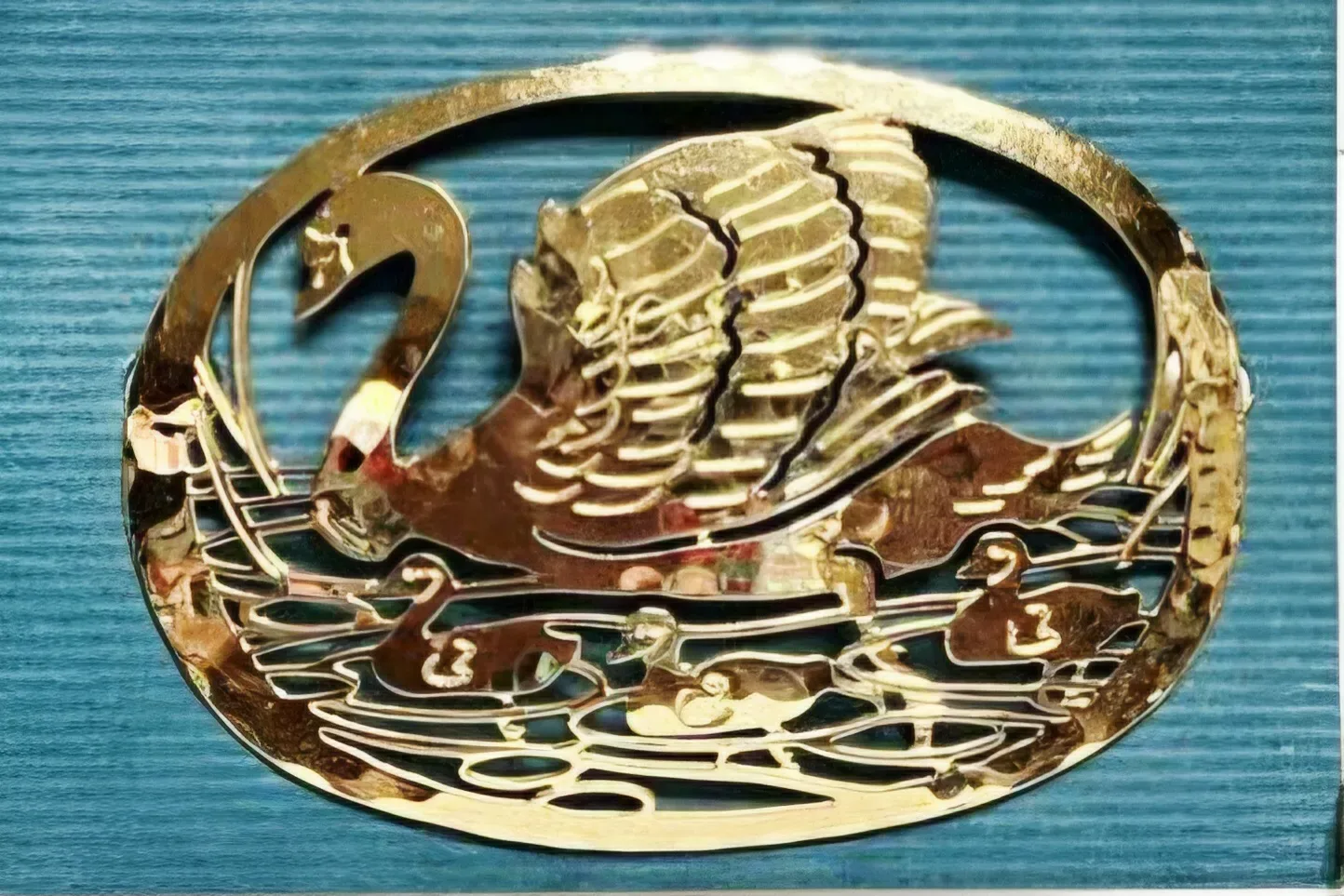
Wild Bryde jewelry pieces often show up on resale sites with descriptions mentioning laser cutting, filigree or piercing, which are jewelry techniques that can create pieces in a similar style. However, Mike Warner's incredibly intricate designs were instead created through chemical etching of the brass, followed by planishing the surface for that faceted look. So, what exactly does that mean, and how do you tell the difference?
How was it made?
Piercing?
Piercing consists of sawing sheet metal with a jeweler's sawframe and blade to remove desired negative space, and is the first technique most jewelry students will be exposed to that could be used to create this type of work. However, piercing is time-consuming and difficult to replicate, and can only create the full depth effect, it can't create more subtle surface effects. In the earliest days of the company, many pieces were pierced by hand, before their processes became more refined.
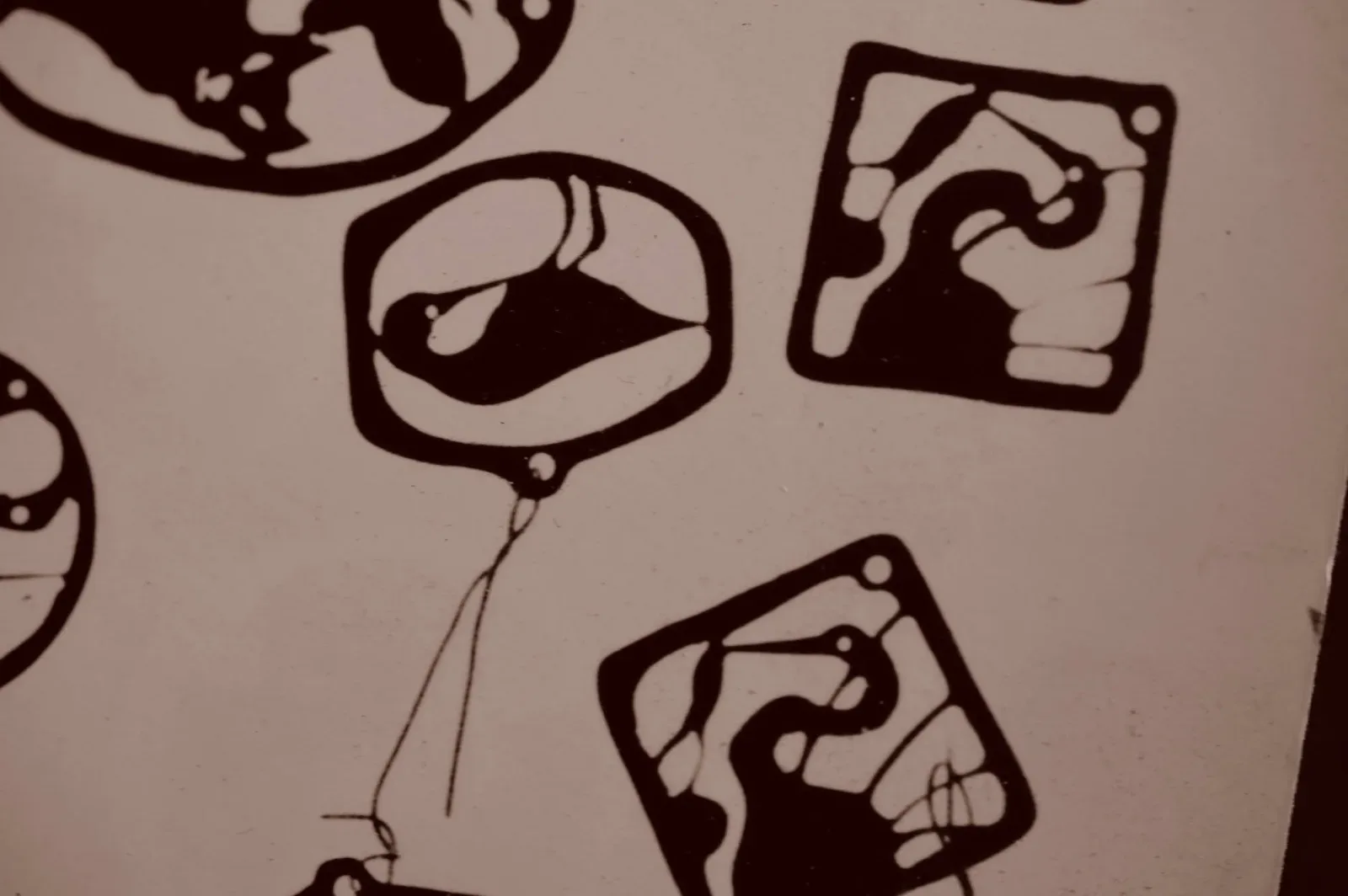
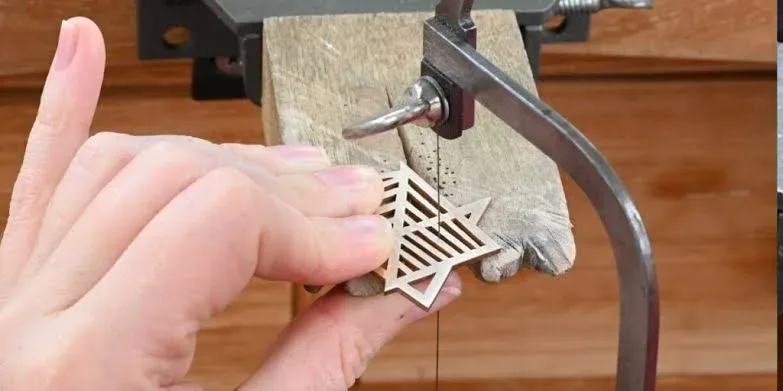
For collectors, one clue to hand piercing is the appearance of the cut edges, which may show slight variations from one opening to another. Under magnification, you may also see subtle irregularities in the contours or corners where the saw changed direction. Piercing removes metal completely, so the openings go all the way through the sheet, leaving no thin layer of metal at the bottom. Although modern tools can produce extremely precise results, the labor involved in piercing intricate designs makes it a very different process from etching, especially when a piece combines openwork with fine surface detailing.
Filigree?
Filigree is another approach to the airy openwork effect that Mike Warner was so renowned for (although still not the one he used to achieve it!). With filigree, the jeweler twists and solders wire to create different shapes - as opposed to piercing (and etching), subtractive techniques which rely on removal of unwanted material to "sculpt" the eventual shape. Rather than starting with a solid sheet and cutting or etching away portions of it, filigree builds the design from individual strands of wire, which are joined together to form a delicate network.
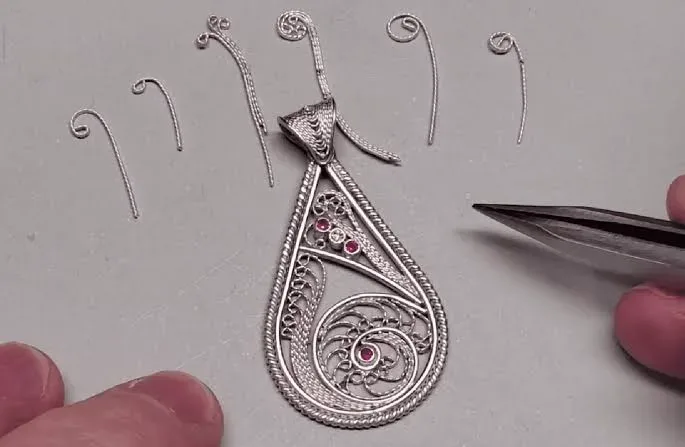
This difference is often visible to the naked eye. Filigree tends to have a more distinctly wire-like, three-dimensional appearance, with individual strands and soldered junctions that can sometimes be seen on closer inspection. Etched sheet metal, by contrast, generally retains the appearance of a continuous sheet, even when much of that sheet has been removed to create open spaces. Additionally, filigree is much more delicate than the sheet metal approach that Wild Bryde used, and would have never held up to the demands of daily life and costume jewelry, much less in such good shape that pieces retain value 40+ years later.
Laser Cutting?
Laser cut pieces, meanwhile, uses a beam of focused light to precisely cut metal (or other materials), and closely mimics the look of pierced pieces without the manual work. It could also mimic the different depths of lines, and would have been a good partial solution for Wild Bryde, had it been widely accessible in the 1980s when they began production. In reality, that didn't happen until the early 2000s, by which time Wild Bryde's style was well established, so that's not the answer either.
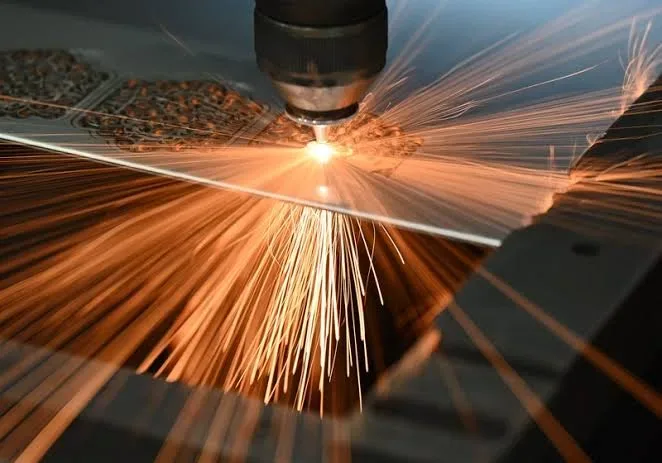
Laser cutting and traditional piercing can be difficult to distinguish from photographs alone, since both can produce openings that extend completely through the metal. With close inspection, laser-cut edges may appear exceptionally consistent, sometimes showing slight discoloration or heat-related marks depending on the material and cutting process. Hand-pierced edges may have different tool marks, while chemically etched edges can have their own characteristic contours. These are clues rather than absolute rules, however: finishing, wear, and the quality of the original work can make the distinctions less obvious.
For vintage collectors, chronology is another useful piece of evidence. A technique may be physically capable of producing a particular design, but that doesn't mean it was used by a specific maker at the time. Comparing the construction with known examples, documented production dates, and other pieces from the same collection can help rule out techniques that don't fit the object's history.
An Ancient Answer
So what IS the answer? An ancient technique known as chemical etching, mixed with a few Mike Warner innovations. Chemical etching has been going on for over 2000 years, with evidence found of Egyptians and early craftsmen applying organic substances like linseed oil or beeswax as a protective barrier (resist) on soft metals like copper, then scratching off their designs and using weak acids like vinegar to etch them. Nowadays the chemicals are stronger and the process a bit more high-tech, but the fundamentals haven't changed in thousands of years.
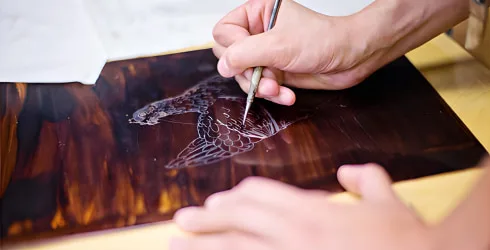
Etching requires just three things - the material to be etched, an acid to do the etching, and a resist to protect the areas you want to retain. Jewelers use everything from sharpies to stamping ink to printable UV transfer papers to get the exact design they want, and then submerge their piece in the acid bath and wait for the magic to happen.
The important distinction is that etching doesn't have to remove all the way through the metal. Depending on how the resist is applied and how long the metal is exposed to the etchant, the process can produce shallow lines, recessed areas, or complete openings. This ability to create different depths in a single piece is what makes etching particularly useful for intricate jewelry designs. A collector examining an etched piece may notice that some lines appear recessed or shadowed while the surrounding surface remains intact, rather than seeing only the clean, full-depth openings associated with piercing.
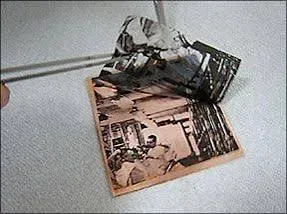
Photo etching, in particular, allows a detailed design to be transferred onto a metal surface before the chemical process begins. This makes it possible to reproduce fine details and intricate patterns with considerable consistency. This is the technique that Mike Warner once referred to on his website as "painting with acid."
Wild Bryde's Approach
The key difference in how Mike Warner used photo etching is its versatility in his hands. He used etching as a way to create fully negative space, by allowing the acid to eat all the way through the metal and create the openwork effect. In addition, he then layered that with surface etching on some pieces to add subtler lines and depth to the composition.
This combination is particularly useful when trying to identify Wild Bryde pieces. Look for designs where fully open areas sit alongside fine engraved-looking lines or shallow recessed details, all formed as part of a coherent composition. Rather than looking like separate pieces of wire assembled together, the design emerges from the original sheet metal itself. The combination of openwork and surface detail is a stronger clue than any one feature in isolation, since individual visual characteristics can sometimes be reproduced using other methods.
Then, the studio used an approach that killed two birds with one stone. They used hammers to hand-planish the surface of each piece, which both hides any leftover effects from the etching with a beautiful faceted texture, and simultaneously rearranges the metal molecules to strengthen the piece. It's quite a brilliant technique, and incredibly versatile, as the collection of hundreds of designs clearly shows.
Planishing adds another useful clue for collectors. Instead of a uniformly smooth or polished surface, a planished piece may display numerous small, flattened facets that catch the light at different angles. These subtle variations give the metal a lively, almost hand-carved appearance. They can also make fine etching marks less immediately obvious, which is one reason it helps to examine a piece under angled light rather than relying on a single straight-on photograph. Planishing is not exclusive to Wild Bryde, of course, but in combination with the characteristic openwork, surface detailing, and known design language, it helps build a more complete picture of how a piece was made.
Each piece is then run through a vibratory tumbler to debur the metal edges, smooth rough surfaces, and prepare the brass for an even finish without losing the fine detailing of the original etch. Plating is the final step to get the desired finish, in 14k gold as a standard or rhodium as a frequent option, with solid sterling silver pieces offered occasionally.
These finishing steps matter, too, because they can obscure some of the evidence collectors might otherwise use to identify the manufacturing process. Tumbling softens rough edges, planishing changes the surface texture, and plating can affect the appearance of the underlying metal. For this reason, it is best to consider the whole piece - its construction, openings, recessed lines, surface texture, finish, and provenance - rather than relying on a single visual clue. When possible, comparing a piece with documented examples from the same maker is one of the most reliable ways to build confidence in an identification.
Why the Right Terminology Matters
For collectors, identifying the technique is about more than satisfying curiosity. It helps explain a piece's construction, places it in the context of a maker's working methods, and can help distinguish it from similar-looking jewelry made by other processes. Understanding the difference between etched, pierced, filigree, and laser-cut work also makes it easier to compare examples accurately and communicate what makes a particular piece distinctive.
It matters just as much when listing a piece for sale. Online searches depend heavily on specific keywords, and experienced collectors often search for the exact terminology associated with a maker or manufacturing method. A listing that describes a piece as "openwork," "cutout," "etched," "pierced," and "filigree-style" may reach a wider range of casual shoppers, but using several loosely related terms without distinguishing between them can also misrepresent how the piece was actually made.
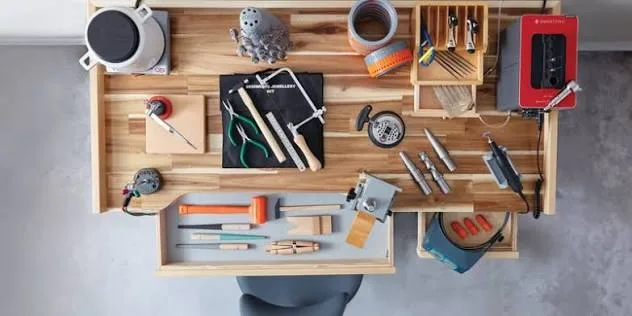
A better approach is to lead with the most accurate description, then add related terms where they genuinely help someone find the piece. For example, a listing for a Wild Bryde design might describe it as "photo-etched openwork brass wildlife jewelry with hand-planished detailing and gold plated finish." Additional searchable phrases such as "vintage openwork wildlife jewelry" or "hammered etched animal brooch" can help broaden its reach without incorrectly identifying the technique as filigree or piercing.
The goal is not to cram every possible variation into a listing, but to use the right keywords in the right context. Collectors and specialists may be searching for one very particular term, and precise descriptions help them find what they are looking for while preserving the distinction between techniques. The more accurately we document these details, the easier it becomes to recognize, research, and preserve the history of the pieces we collect.
So, not filigree, not laser cut, not pierced - these pieces are etched, planished, tumbled and then plated. Old fashioned, time-worn techniques used for decades to create an incredible variety of wildlife-focused work. I think that's a legacy worth preserving