Etched, Pierced or Laser Cut? How Did Wild Bryde Do It?
July 22, 2026

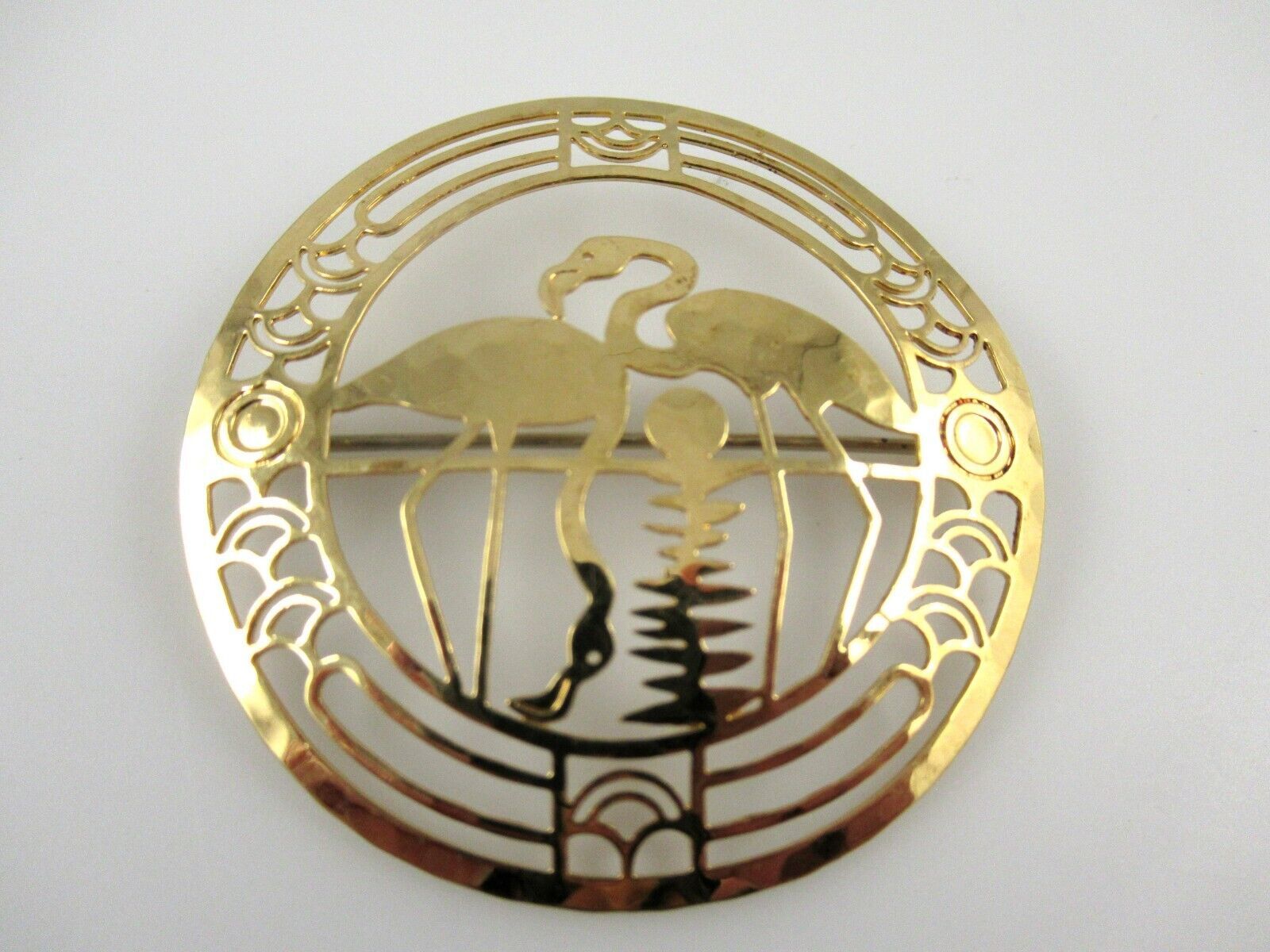
Wild Bryde jewelry pieces often show up on resale sites with descriptions mentioning laser cutting, filigree or piercing, which are jewelry techniques that have outcomes that resemble Wild Bryde's, but which Mike Warner never used. Instead, their incredibly intricate designs were created through chemical etching of the brass, followed by planishing the surface for that faceted look. What exactly does that mean? Read on...
How was it made?
Piercing?
Piercing consists of sawing sheet metal with a jeweler's sawframe and blade to remove desired negative space, and is the first technique most jewelry students will be exposed to that could be used to create this type of work. However, piercing is time-consuming and difficult to replicate, and can only create the full depth effect, it can't create more subtle surface effects. On its own, it would be sufficient to create some of the simpler pieces that Mike Warner made, but not enough to create the actual collection.
Filigree?
Filigree is another approach to the airy openwork effect that Mike Warner was so renowned for (although still not the one he used to achieve it!). With filigree, the jeweler twists and solders wire to create different shapes - as opposed to piercing (and etching), subtractive techniques which rely on removal of unwanted material to "sculpt" the eventual shape. However, filigree is much more delicate than the sheet metal approach that Wild Bryde used, and would have never held up to the demands of daily life and costume jewelry, much less in such good shape that pieces retain value 40+ years later.
Laser Cutting?
Laser cut pieces, meanwhile, uses a beam of focused light to precisely cut metal (or other materials), and closely mimics the look of pierced pieces without the manual work. It would have been a good partial solution for Wild Bryde, had it been widely accessible in the 1980s when they began production. In reality, that didn't happen until the early 2000s, so that's not the answer either.
An Ancient Answer
So what IS the answer? An ancient technique known as chemical etching, mixed with a few Mike Warner innovations. Chemical etching has been going on for over 2000 years, with evidence found of Egyptians and early craftsmen applying organic substances like linseed oil or beeswax as a protective barrier (resist) on soft metals like copper, and using weak acids like vinegar to etch them. Nowadays the chemicals are stronger and the process a bit more high-tech, but the fundamentals haven't changed in thousands of years. Etching requires just three things - the material to be etched, an acid to do the etching, and a resist to protect the areas you want to retain. Jewelers use everything from sharpies to stamping ink to printable UV transfer papers to get the exact design they want, and then submerge their piece in the acid bath and wait for the magic to happen.
Wild Bryde's Approach
The key difference in how Mike Warner used photo etching is its versatility in his hands. He used etching as a way to create fully negative space, by allowing the acid to eat all the way through the metal and create the openwork effect. In addition, he then layered that with surface etching on some pieces to add sublter lines and depth to the composition.
Then, since etching can leave a strange surface texture, the studio used an approach that killed two birds with one stone. They used hammers to hand-planish the surface of each piece, which both hides any leftover effects from the etching with a beautiful faceted texture, and simultaneously rearranges the metal molecules to strengthen the piece. It's quite a brilliant technique, and incredibly versatile, as the collection of hundreds of designs clearly shows.
Planishing demo from Wild Bryde's old facebook page
They are then run through a vibratory tumbler to debur the metal edges, smooth rough surfaces, and prepare the brass for an even finish without losing the fine detailing of the original etch. Plating is the final step to get the desired finish, in 14k gold as a standard or rhodium as a frequent option, solid sterling silver offered occasionally.
So, not filigree, not laser cut, not pierced - these pieces are etched, planished, tumbled and then plated. Old fashioned, time-worn techniques used for decades to create an incredible variety of wildlife-focused work. I think that's a legacy worth preserving.